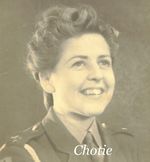
Chotie Darling
Dedicated to the memory of my mother
and all those who hold the forever young of war in their hearts.
Part 4 Only the Enemy in Front
Chapter 13 Market Garden and the Netherlands
17th September 1944 – Field Marshal Montgomery launches Operation Market Garden to reach Germany via the Netherlands, skirting the well-defended Siegfried line.
On 17th September 1944 50th (Northumbrian) Division watched as one of the largest air armadas of the war passed overhead. The planes were heading for drop zones behind enemy lines so airborne forces could seize vital targets for Montgomery’s 'Market Garden’. This was a plan for the Allies to advance into the Netherlands on a narrow front, avoiding the defences of the Siegfried line by punching their way into Germany from the north-east and making the most of now very-overstretched supplies. The 50th’s field artillery and mortars took part in the 1:30pm opening barrage to punch a way over the border from Belgium.
In XXX Corps, the Guards Armoured Division (Ted's unit) were to lead the ‘Garden’ advance on the ground with 43rd (Wessex) Division following up behind, then the 50th (Northumbrian) Infantry Division. 61st Recce operated on the west flank of the Guards.
‘Market’ represented the airborne forces – 35,000 men to be landed over three days by parachute or glider. To ‘lay a carpet’ for the Guards advance US 101st Airborne Division, (the ‘Screaming Eagles’) were to take the nearest bridges between Eindhoven and Veghel; those crossing the Wilhelmina Canal at Son and Best, the river Dommel at St Oedenrode and the Zuid Willems Canal south-west of Veghel. Meanwhile the (‘All American’) 82nd Airborne Division needed to seize the bridge over the Maas at Grave, those between Grave and Nijmegan over the Maas-Waal Canal and the road crossing over the Waal at Nijmegen. British 1st Airborne Division had been assigned the furthest Neder Rijn bridges at Arnhem.
Lieutenant General Frederick Browning (see 1st Airborne), deputy head of the 1st Allied Airborne Army, devised the ‘Market’ plan on Montgomery’s orders and famously remarked that 'we might be going a bridge too far'. There were too few planes to carry so many airborne in one lift so they would need to drop over three days, defending the landing and dropping zones while advancing on the target. These zones were also some distance from the target bridges because of anti-aircraft defences. Major General Robert Urquhart, commander of the British 1st Airborne, had only seven days to come up with a plan to “take Arnhem Bridge and hold it” and told Browning on 15th September that he regarded it as a suicide mission. Major General Stanislaw Sosabowski, leader of the Polish Independent Brigade, which were to be landed south of the Neder Rijn two days after the first British landing, was equally sceptical
The Guards Armoured Division was meant to reach Eindhoven in 2-3 hours and Arnhem in 60 hours, a distance of 103 kilometres up a single road with polderland flood plain on either side broken only by woods and plantations.
The first drift of the Airborne units were landed successfully in their drop zones but because these were not close to targets some of the vital element of surprise was lost. This was critical for the 82nd US Airborne who were held up in the town of Nijmegen and failed to take its vital road bridge. They also had to man defensive positions facing Germany and the Reichswald Forest. A small group of men from the 82nd’s Easy company did, however, manage to rapidly secure the bridge over the Maas at Grave, south-west of Nijmegen. The paras also took one intact bridge over the Maas-Waal canal at Heumen.
Beyond Nijmegen the British Airborne were to encounter far stronger German opposition than anticipated: 1st SS Panzer Corps’ 9th and 10th Divisions were in the area to refit, a battalion of Waffen SS was based near their landing zone at Wolfheze and Field Marshal Walter Model (successor to Rommel as commander of Army Group B - the north-west front in Europe) had made his HQ in the Hotel Tafelberg at Oosterbeek, a village to the west of Arnhem. Forces heading for the town on three routes from the drop zones on Ginkel Heath all met firm resistance. The Waffen SS had rapidly established a defensive line across the two main roads into Arnhem (the British ‘Leopard’ and ‘Tiger’ routes) and the railway line. Radio failure meant the two commanders, Major-General Urquhart and his Brigadier Lathbury (of 1st Parachute Brigade), had to meet in person. Urquhart and Lathbury were then cut off from their HQs for two days, which led to considerable confusion.
Lt.-Colonel John Frost’s (see The Bruneval Raid) 2nd Parachute Battalion (following the southern ‘Lion’ route) found their objective, the Arnhem railway bridge, had been blown but they secured a defensive position at the north end of the road bridge. This was the destination assigned to another of Dick’s former units, Major Freddie Gough’s Airborne Reconnaissance Squadron, who had bumped into an SS battalion. Nevertheless Gough and some of his men also reached the bridge. (See ‘Operation Market Garden, Netherlands 17th – 25th September 1944’.). By the next morning they’d been joined by 110 men from their 1st Parachute Brigade’s HQ, fifty assorted others including glider pilots and 45 men from 3rd Parachute Battalion, giving Frost 740 men under his command.
The advance on the ground from Belgium was not as smooth as anticipated. Having secured the vital bridge over the Bocholt-Herentals Canal (known as Joe’s Bridge in their honour) at Pelt on 10th September the Irish Guards were tasked with leading the column. They entered Holland but by the end of the day had only reached Valkenswaard, south of Eindhoven, after fighting for every kilometre against re-grouped German forces. (The 50th’s 231st Brigade were clearing woods on the left of the Guards advance). They were already behind schedule. About 15 miles to the north, on the other side of Eindhoven, the first major bridge at Son en Breugel had been blown up in the face of the 101st Airborne paratroopers sent to secure it. (Apparently one troop of 61st Recce got across the bridge at Son before it was blown.) By nightfall the 101st had secured St Oedenrode and Veghel, north of Einhoven.
It seems the Guards delayed, waiting for the Royal Engineers who would build a Bailey Bridge* over the Wilhelmina Canal.
*the British portable, pre-fabricated truss bridge invented during WW2 and developed in Christchurch, Dorset.
61st Recce's Anthony Rampling recalls:
“In Market Garden we were trying to get up to Arnhem to get the paras out. We saw the paras dropping – the sky was full of them. The British dropped too near the Germans who were well fortified.” From Anthony Rampling’s account of 61st Recce (pers comm).
Roy Howard’s book outlines some of the difficulties faced by XXX Corps in their advance (page 83 of ‘Beaten Paths are Safest’, Brewin Books 2004). His ‘A’ Squadron were leading 61st Recce’s advance on the left flank of XXX Corps, advancing at 14:35 (H-Hour) from Mol (between Geel and Joe’s bridge) on the Bocholt-Herentals Canal in Belgium towards Valkenswaard in the Netherlands, on the left flank of the Irish Guards. They entered the town just after dark.
On 17th September Eric Brewer, of B Squadron’s Assault unit, was: “Still in same position (on the Bocholt-Herantals Canal?). Watched Gerry still messing around. Gave details of blown bridge to R.E. (Royal Engineers). We left this position so that a barrage could be put down to allow the R.E. to put up bridge. Infantry crossed over the barrage and took up position so that a barrage could be put down to allow the R.E. to put up bridge. Infantry crossed over the barrage and took up positions while the R.E. made a bridge. Big push coming off - going to push on the Zuider Zee.”
Eric then headed for the ‘core grouping area waiting for big push’ (probably Hasselt, south of Lommel and Leopoldsburg) but remained there until 21st September, according to his diary.
Another reconnaissance regiment (Dick’s future regiment) the 52nd (Lowland), were at Heusden-Zolder, just south of Burg Leopold near Ghent, on 17th September waiting to join the frontline behind the Guards.
Sandy Handley remembers the excitement of it all – and the frustration as ‘brewed up’ tanks blocked the single highway impeding progress:
“Later by September we were told that a big air drop was going to take place in Holland. Our job was to meet up with the airborne troops.
Off we went up what they called the corridor, so many vehicles going up one main road it seemed. On a personal note we was really excited about the airborne drop, Market Garden as they named it. We thought not much longer now. But the stopping and starting for miles, everywhere it was chocker block, all going one way.
One day we was going fairly steady and another Armoured Recce, caught us up - may have been the Household Cavalry. As their cars went by I looked over to a Daimler armoured car, and there looking out of the top of the turret was a chap I hadn’t seen since 1940 when he was in the West Kents. I couldn’t remember his name. He shouted over to me “What are you doing up here?” “Same as you mate.” We grinned and waved. That was the last time I saw him.” (From Ex Trooper S Handley’s ‘61 Recce - Memories of Normandy 1944 – 1945’, unpublished)

Recent Comments